
Originally posted October 1, 2026
When I was a kid, one of my favorite toys was a plastic pistol that fired suction cup darts. It looked a lot like a Beretta 92, the pistol that was to become well-known in the 1980s as the U.S. military's replacement for the M1911A1, but different enough that I assumed it was a Legally Distinct™ toy design. Only much later did I discover that it was not; it was a slightly-scaled-down but quite accurate copy of its predecessor in the Berette lineup, the Modello 1951.
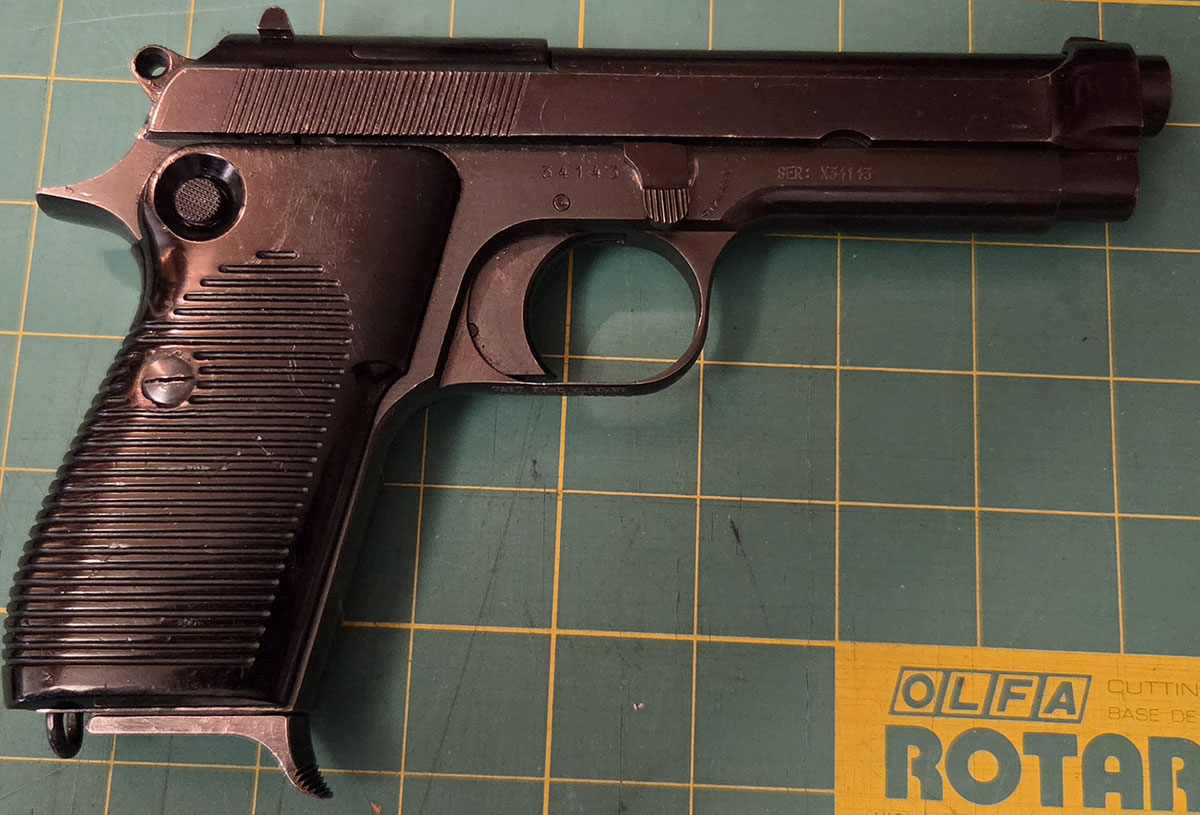
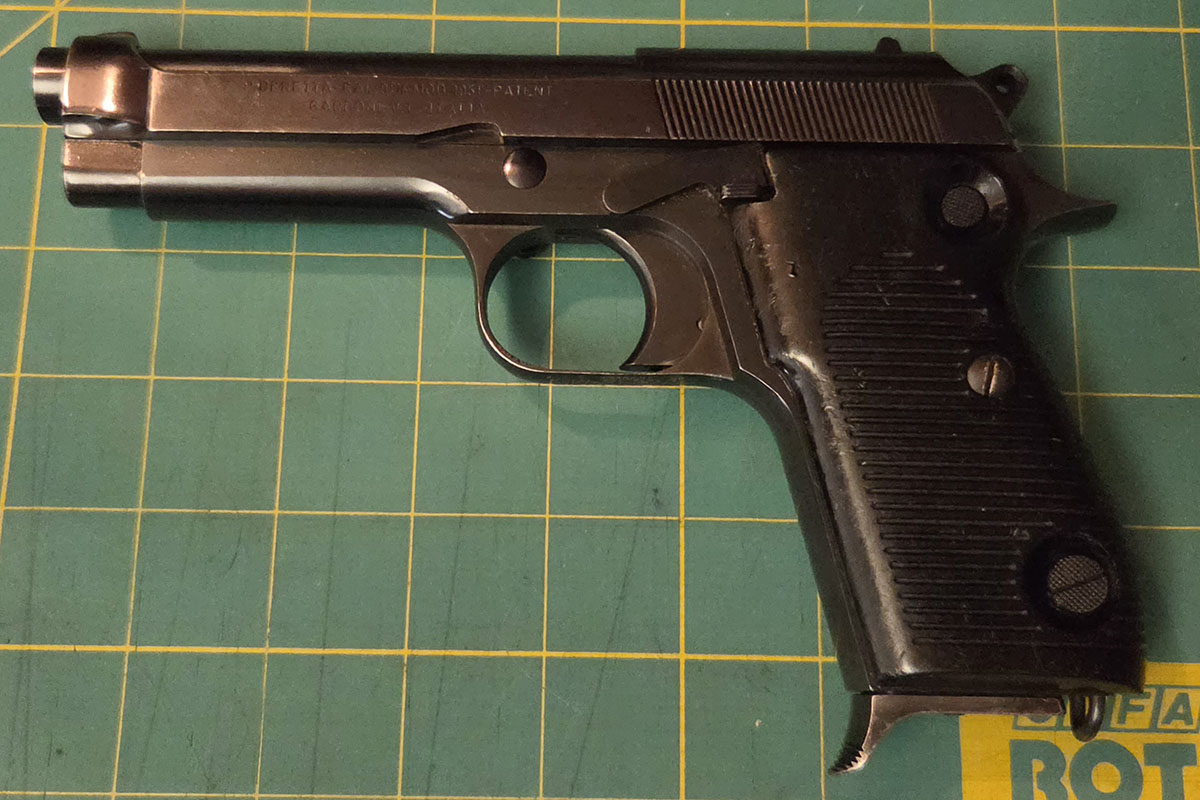
I feel like the family resemblance should be obvious:
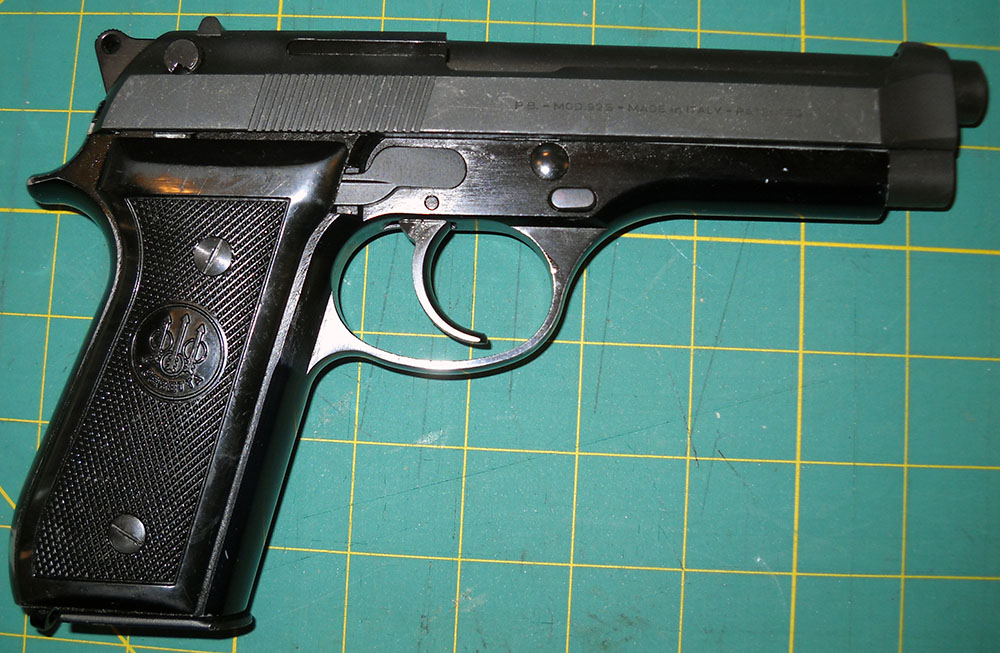
This resemblance is also present on the inside.
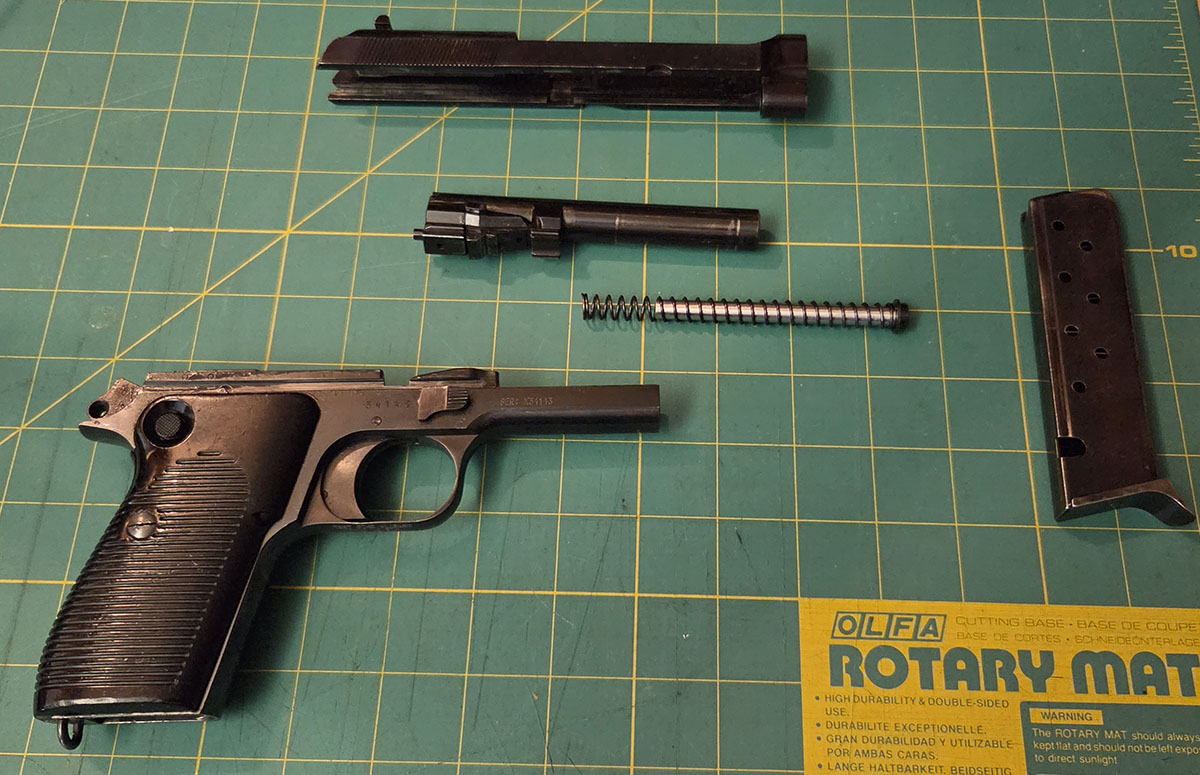
Like the model that came after it, the 951 (as it's named on the English-language owner's manual) is a sort of hybrid of a Browning action and the fixed-barrel, falling-block action of the Walther P38. The Browning resemblance is mainly in the single under-barrel recoil spring, as opposed to the Walther's twin aft-mounted springs. The locking system, as in the 92, is exactly like the Walther's.
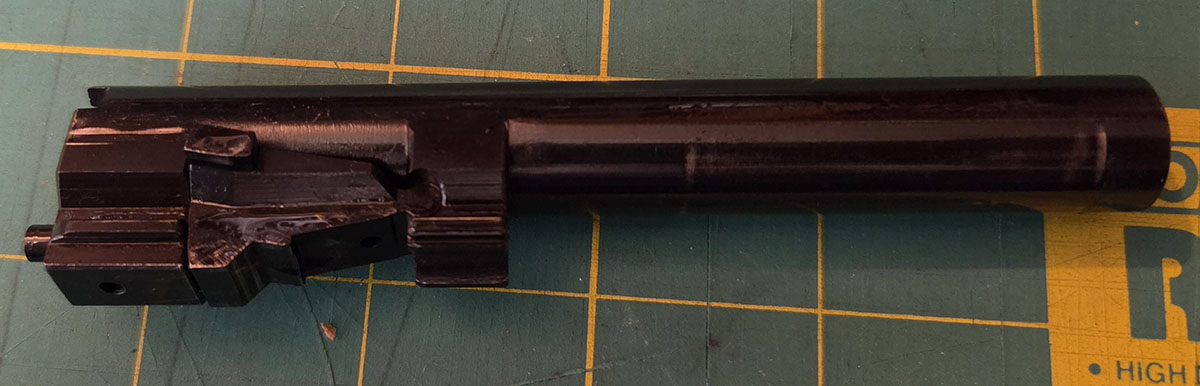
Compare the Walther's:
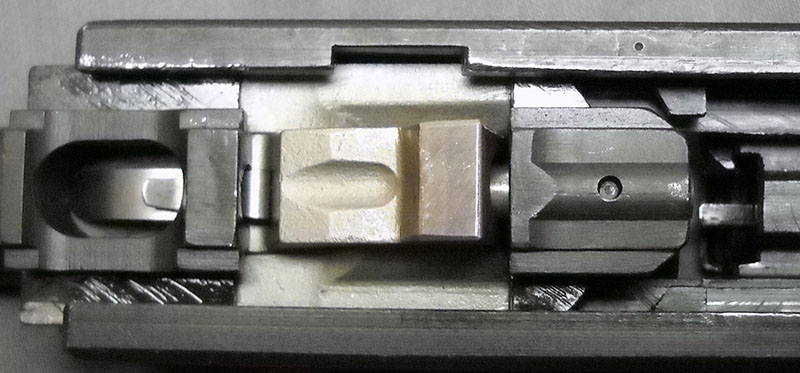
And the 92's:
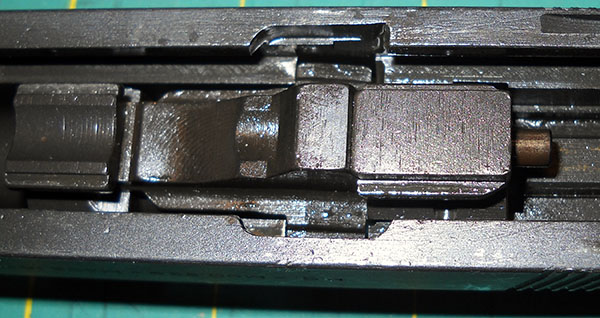
The 951 was designed by the company's long-time production manager, Tullio Marengoni (1881–1965), who had designed the company's prior semiautomatics of the 1930s and, before them, the Modello 1915. All of the 951's predecessors were small, straight-blowback pistols in relatively weak cartridges. The 951 was Beretta's first locked-breech, full-size service pistol chambering a front-line military cartridge, the rapidly-becoming-ubiquitous 9×19mm Parabellum.
Like most service pistols of its era (with the notable exception of the FN GP35/Browning Hi-Power), the 951 has a single-stack magazine, in this case holding eight rounds. The magazine release is a button low on the left side of the grip, a position that would be repeated on early 92 models like the original 92 and the 92S, until it was moved to what we now think of as the more conventional position behind the trigger on the 92F and subsequent revisions. Unlike the P38 that came before it or the 92 that caame after, the 951 also has a single-action trigger mechanism.
Another curious feature of the 951 is the safety. The earlier blowback Beretta pistols had a flip switch, and the 92 series have rotating levers like most modern handguns, but for some odd reason, the 951 has a cross-bolt button, which can be seen at the upper rear corner of the grip. That's a fairly common safety design on shotguns and rifles, but they're pretty rare on handguns. It works, but it makes the handling a little weird... although I guess it could be argued to be ambidextrous.
Speaking of handling, the 951 is slimmer than its successor thanks to the single-stack magazine. The pinky shelf on the magazine is not strictly necessary on a full-size service pistol grip, but I appreciate it nonetheless. If nothing else, it makes the magazine easier to grip when removing it, although it springs out in a surprisingly modern manner when the release is actuated (unlike the magazine in the 1935 I had, which wouldn't come out without a fight). The one I have has a steel frame, which makes the overall gun fairly heavy for its size; later versions were made with aluminum alloy frames, à la the 1950s-and-onward P38/P1 variants.
The 951 was originally made for the use of Italian government agencies, such as the Navy and the Carabinieri, but, oddly, was never adopted by the Army. Although the 9mm version wasn't legal for Italian civilians to own thanks to an Italian law restricting cartridges used by the military, Beretta did produce a variant, sold as the 952, in 7.65×21mm Parabellum (aka 7.65mm Luger) for the domestic civilian market, and the 9mm 951 was produced for civilian export.
The design also saw fairly widespread adoption in North Africa and the Middle East, where, in addition to direct Beretta sales to various nations, it was produced under license in Egypt as the Helwan Brigadier and Iraq as the Tariq. The "Brigadier" name eventually came to be attached to the civilian production 951 as well, at least informally. The model's popularity was such that production continued at Beretta until 1980, eight years after its successor the 92 was launched.
I wasn't able to find any serial number lookups for the 951 that could tell me what year mine was produced, and Beretta had stopped directly stamping production dates on their products by that point, but it's in quite good condition for a surplus pistol bought from Century Arms. The finish, in particular, is mostly intact, which, along with the absence of any property marks, leads me to believe it didn't belong to an issuing agency. It lacks the holster wear one would expect from a police weapon, for example.
One thing it does have is the most comically misaligned rear sight I've ever seen:
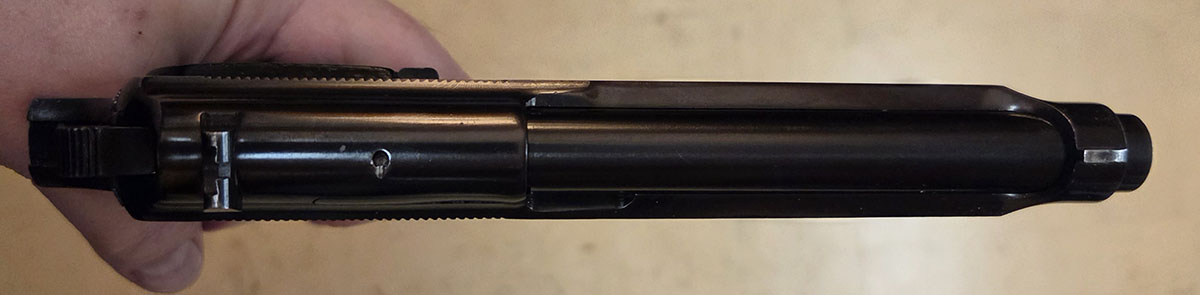
I'm hoping that just got whacked on something, because if it's really where it needs to be, this gun has got problems. Fortunately, tapping it back into the dovetail shouldn't be too hard. I just haven't done it yet because I want to show it to Scott at the range first. I reckon he'll get a giggle out of it. Will report back when I've had a chance to fix that and see how it shoots.